
On November 28, 2016, LaMia Flight 2933 tragically crashed in the mountains of Colombia, carrying the Chapecoense football team to their first-ever Copa Sudamericana final. Of the 77 passengers, only six survived—including three players: Neto, Jakson Follmann, and Alan Ruschel. Their harrowing tale of survival, faith, and perseverance is one of the most emotional stories in sports history. Today, on Krikya, we revisit their journey through their own words, revealing the miracles that kept them alive and the lessons they carry forward.
The Nightmare That Became Reality
Neto had a premonition days before the flight—a vivid nightmare of a plane crash in the rain. He dismissed it as just a bad dream, but the haunting vision lingered. On the day of the flight, he texted his wife: “Pray for me.”
When the plane’s engines failed mid-flight, Neto’s nightmare unfolded in real time.
“The power went down completely. I was wide awake… then the plane fell from the sky. It was beyond our comprehension as humans.”
Jakson Follmann recalled the eerie calm before the crash:
“One second, we were laughing, playing cards, listening to pagode music. The next, silence. The lights went out. All we could do was pray.”
Alan Ruschel, who survived by sheer chance after Jakson convinced him to switch seats, described the aftermath as a blur:
“My brain blocked the memory. I only remember waking up in the hospital, asking my father, ‘Is it true?’”
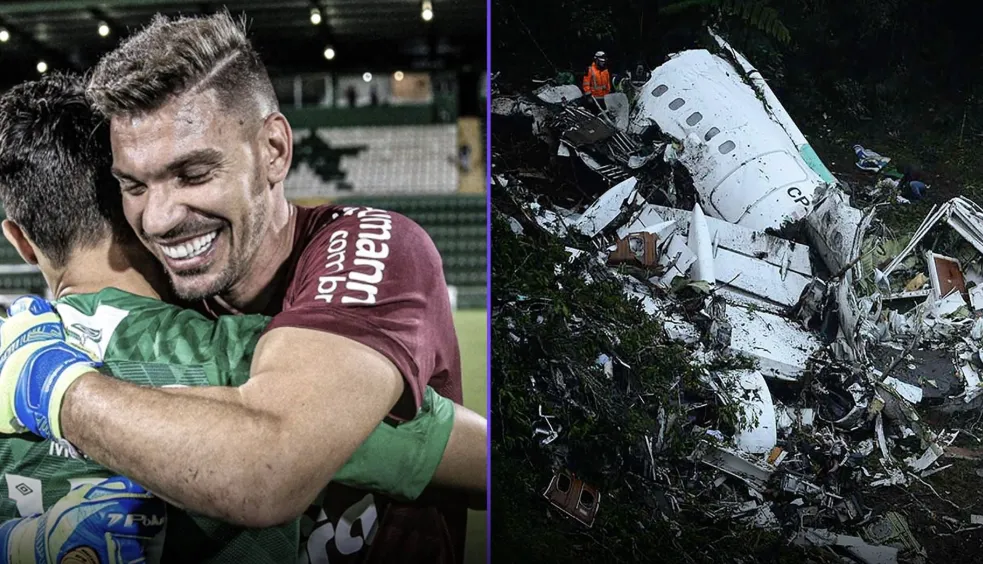
Chapecoense players celebrating their historic Copa Sudamericana semi-final victory before the tragedy.
The Miracle of Survival
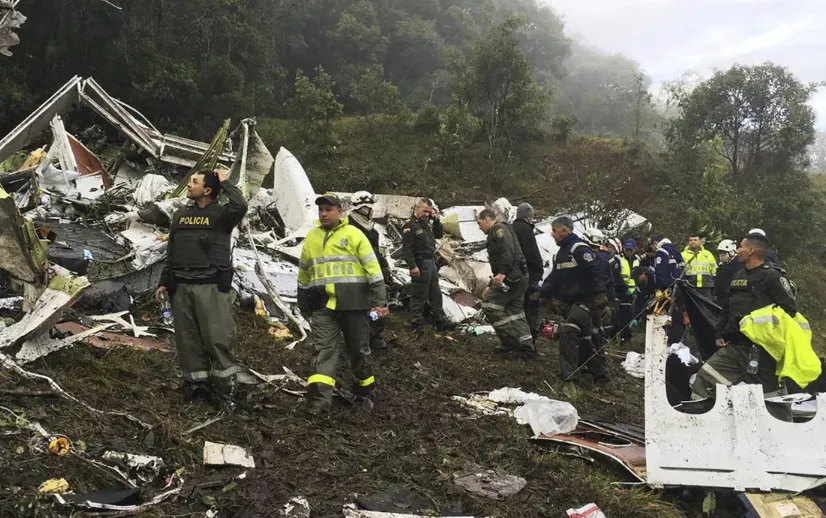
Neto was buried under wreckage for eight hours before rescuers heard his faint moans. A police officer later told him:
“You weren’t supposed to be alive. It’s only because of God that you’re here.”
Jakson, who lost his right leg and nearly his left, woke up in a Colombian hospital with no memory of the crash. His first thought?
“Better my leg than my life. Thank God I’m still here.”
Alan, who narrowly avoided paralysis, credited divine intervention:
“The surgeon who operated on me was one of the best in South America—and he just happened to be in Colombia that day.”
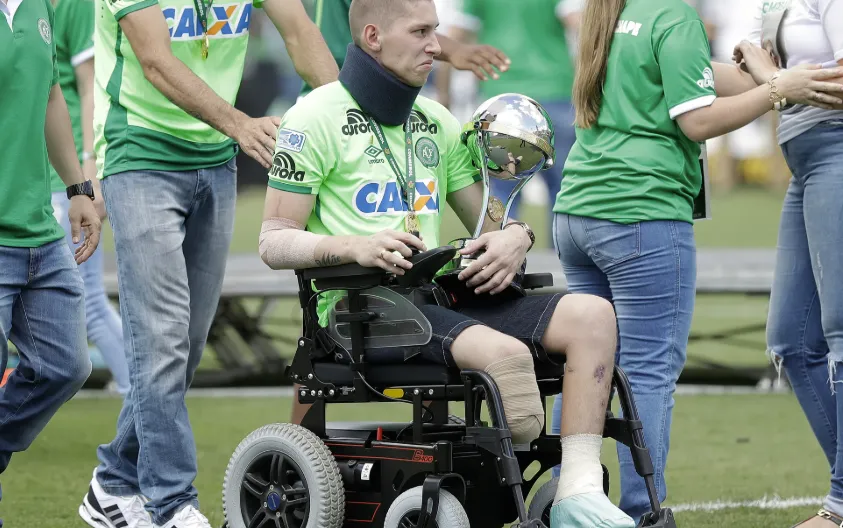
Neto (left) and Jakson (right) before their emotional return to football at the Joan Gamper Trophy.
The Pain of Loss and the Power of Memory
The survivors struggled with guilt and grief. Neto recalled waking up in the hospital, still believing his teammates were alive:
“I asked the doctor, ‘What was the score?’ He lied to protect me. When I finally learned the truth, I couldn’t accept it.”
Alan broke down thinking of Danilo, the team’s goalkeeper, and his family:
“Danilo was like a brother. Realizing he was gone… that pain is indescribable.”
Jakson emphasized the importance of remembrance:
“We don’t want people to forget our friends. They were heroes—fathers, sons, brothers.”
Fans and families paying tribute to the Chapecoense players lost in the crash.
Justice, Faith, and Moving Forward
Neto blamed corporate negligence for the crash:
“The airline cut fuel to save money. It wasn’t just the pilot’s error—it was greed.”
Yet, despite their trauma, the survivors found strength in faith. Jakson, now walking with a prosthetic leg, said:
“I didn’t lose my smile. Tomorrow belongs to God.”
Alan, who returned to professional football, shared a powerful message:
“Live life to the fullest. You don’t know what tomorrow brings.”
Neto, who kicked a ball again months later, described it as a rebirth:
“I felt like a child. God gave me a second chance—I won’t waste it.”
Neto, Jakson, and Alan walking onto the field together—a symbol of resilience.
Conclusion: A Story Beyond Football
The Chapecoense tragedy transcends sport. It’s a story of human fragility, divine intervention, and unbreakable spirit. As Krikya reflects on this emotional journey, we honor the lives lost and celebrate the survivors who continue to inspire millions.
“We were supposed to die that day. Every breath since has been a gift.” — Neto
For more in-depth sports stories and analyses, stay tuned to Krikya—your home for powerful narratives in the world of football.
